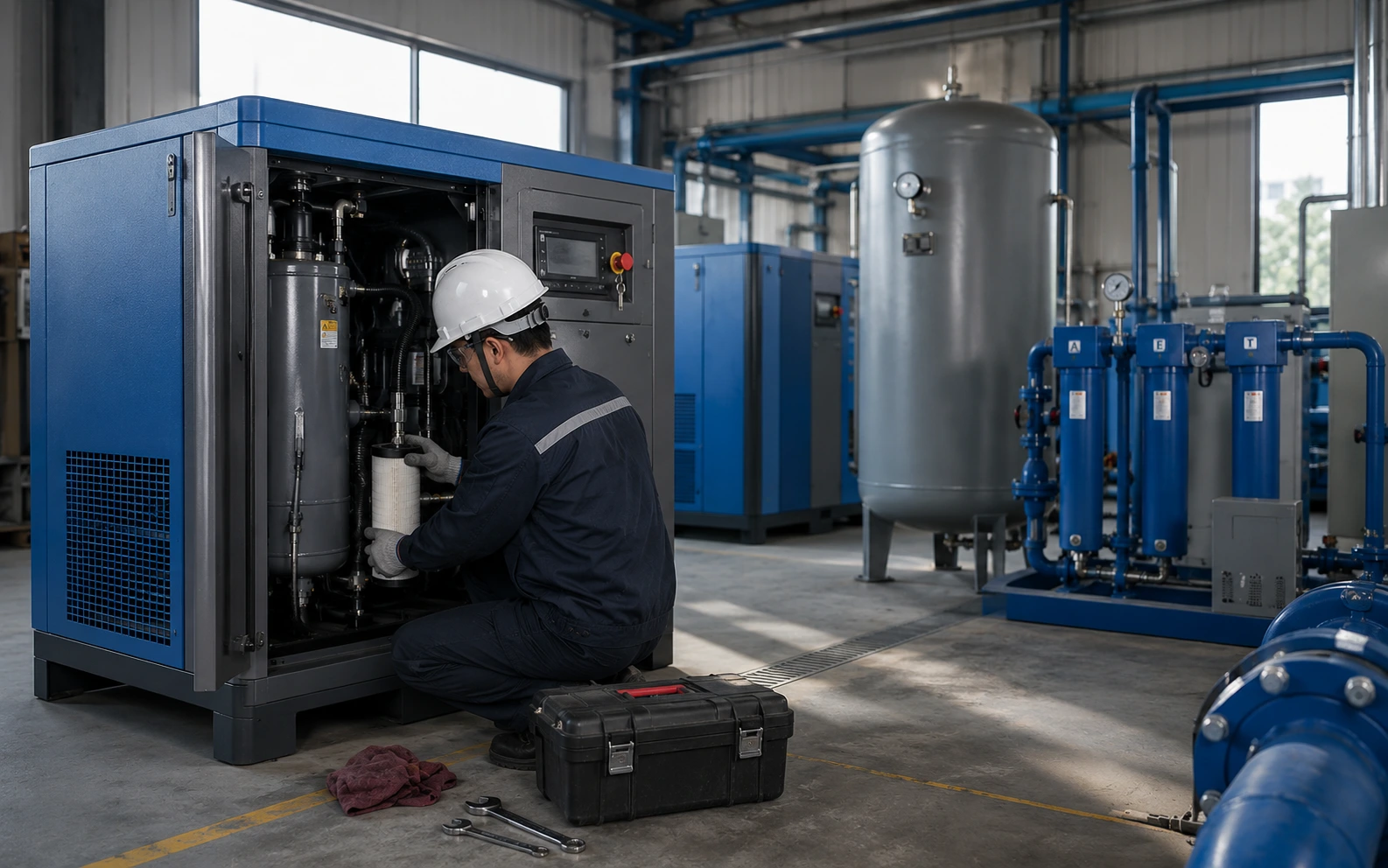
Routine maintenance is one of the most effective ways to keep a screw air compressor running efficiently and reliably. A compressor may continue operating even when filters are dirty, oil quality is declining, or cooling performance is getting worse, but these small problems can gradually increase energy consumption and eventually lead to unexpected downtime.
A simple maintenance checklist helps operators identify problems early and keeps the compressed air system in good condition.
Lubricating oil is essential for oil-injected screw air compressors.
Before starting the machine, check whether the oil level is within the normal range. If the level is too low, lubrication and cooling performance may be affected. If oil consumption increases abnormally, the system should also be checked for leakage or other problems.
The oil should be replaced according to operating hours and actual working conditions rather than waiting until its condition has obviously deteriorated.
The air filter prevents dust and particles from entering the compressor.
A clogged air filter increases intake resistance, which can reduce compressor efficiency and increase power consumption. In dusty environments, inspection intervals should be shortened.
If the filter element is heavily contaminated or damaged, it should be replaced promptly.
The oil filter helps keep contaminants out of the lubrication system.
As the filter becomes blocked, oil circulation can be affected. This may increase operating temperature and reduce lubrication performance.
Regular replacement of the oil filter is therefore an important part of preventive maintenance.
The air-oil separator separates lubricating oil from compressed air before the air leaves the compressor.
If the separator becomes clogged, system pressure loss may increase and compressor efficiency may decrease. Excessive oil carryover in the compressed air can also indicate a separator problem.
Its operating condition should be checked regularly and the element replaced according to the maintenance schedule.
Leaks are often small at first and easy to ignore.
Inspect hoses, fittings, valves, pipelines, seals, and connections for signs of oil leakage or compressed air leakage.
Even a small compressed air leak can waste energy continuously while the compressor is running.
The cooler is responsible for removing heat generated during compression.
Dust, oil, and dirt on the cooler surface reduce heat dissipation and may cause the compressor to operate at a higher temperature.
The cooler should be cleaned regularly, especially in environments with high dust levels or poor ventilation.
Compressed air contains moisture, which can collect inside the air receiver tank.
If condensate is not discharged regularly, it can lead to internal corrosion and affect downstream air quality.
Manual drain valves should be checked and operated regularly. If an automatic drain is installed, its function should also be inspected.
Loose electrical connections may cause unstable operation, overheating, or electrical faults.
During scheduled maintenance, inspect terminals, contactors, cables, and other electrical components.
Any abnormal discoloration, overheating, or loose connection should be corrected before the compressor returns to normal operation.
Operators should regularly record the compressor's operating pressure and temperature.
Sudden changes may indicate problems such as a blocked filter, poor cooling, abnormal lubrication, or increased system resistance.
Comparing current readings with normal operating records can help detect problems before they become serious.
Every maintenance action should be recorded.
The record can include:
Maintenance records make it easier to plan future service and identify recurring problems.
Daily inspections should focus on oil level, pressure, temperature, noise, vibration, leakage, and condensate drainage.
Periodic maintenance should include cleaning the cooler, checking filters, inspecting electrical connections, and examining pipelines and fittings.
Major service should be carried out according to compressor operating hours and actual site conditions.
Routine compressor maintenance does not need to be complicated, but it must be consistent.
Regularly checking oil, filters, separators, cooling systems, tanks, electrical components, and operating parameters can reduce unexpected failures, maintain stable air supply, and extend equipment service life.
A few minutes of inspection today can often prevent several hours of downtime later.
Our engineers will reply with a suitable solution within 24 hours.